A reusable bag is often treated as the packaging around a promotion. In practice, it can be the part people keep the longest.
A well-made bag follows its owner to supermarkets, offices, exhibitions, picnics and weekend trips. Every reuse puts the brand back in view. That is why choosing custom reusable bags involves more than selecting a color and placing a logo. Material, construction, handle style, printing and intended use all affect how the finished bag looks and how often it will be used.
At COMPAURA, we help brands develop reusable bags for promotional campaigns, retail packaging, corporate events, employee gifts and everyday merchandise. This guide compares several practical options and explains what happens behind the finished product.
Start With How the Bag Will Be Used
Before comparing fabrics, decide what the bag needs to carry.
A lightweight giveaway bag has different requirements from a grocery tote, insulated lunch bag or zippered storage bag. The expected load, frequency of use and available print area should guide the structure.
| Bag type | Best suited for | Main advantage | Common branding options |
|---|---|---|---|
| Non-woven shopping bag | Events, retail and promotional giveaways | Lightweight and practical | Screen printing, heat transfer and full-color printing |
| Laminated PP woven tote | Grocery, retail and high-impact campaigns | Strong structure and vivid graphics | Gravure or laminated full-surface printing |
| Insulated cooler bag | Food, beverages and employee gifts | Useful beyond the original event | Screen printing, heat transfer and printed panels |
| Cotton tote bag | Lifestyle merchandise and retail | Natural feel and everyday appeal | Screen printing, embroidery and heat transfer |
| Zippered storage bag | Home organization and product packaging | Large capacity and secure closure | Screen printing and printed fabric panels |
Non-Woven Shopping Bags: Practical for Larger Campaigns
Non-woven bags remain a reliable option for exhibitions, retail promotions, community events and welcome packs. They are lightweight, easy to store and available in many colors and shapes.
The simplest version uses flat handles and an open top. Adding a bottom or side gusset creates more carrying space, while piping and reinforced handles can give the bag a more structured appearance.
For straightforward logos with one or two solid colors, screen printing is usually a practical choice. More detailed artwork can be applied using heat transfer or full-color printing, depending on the fabric and order requirements.
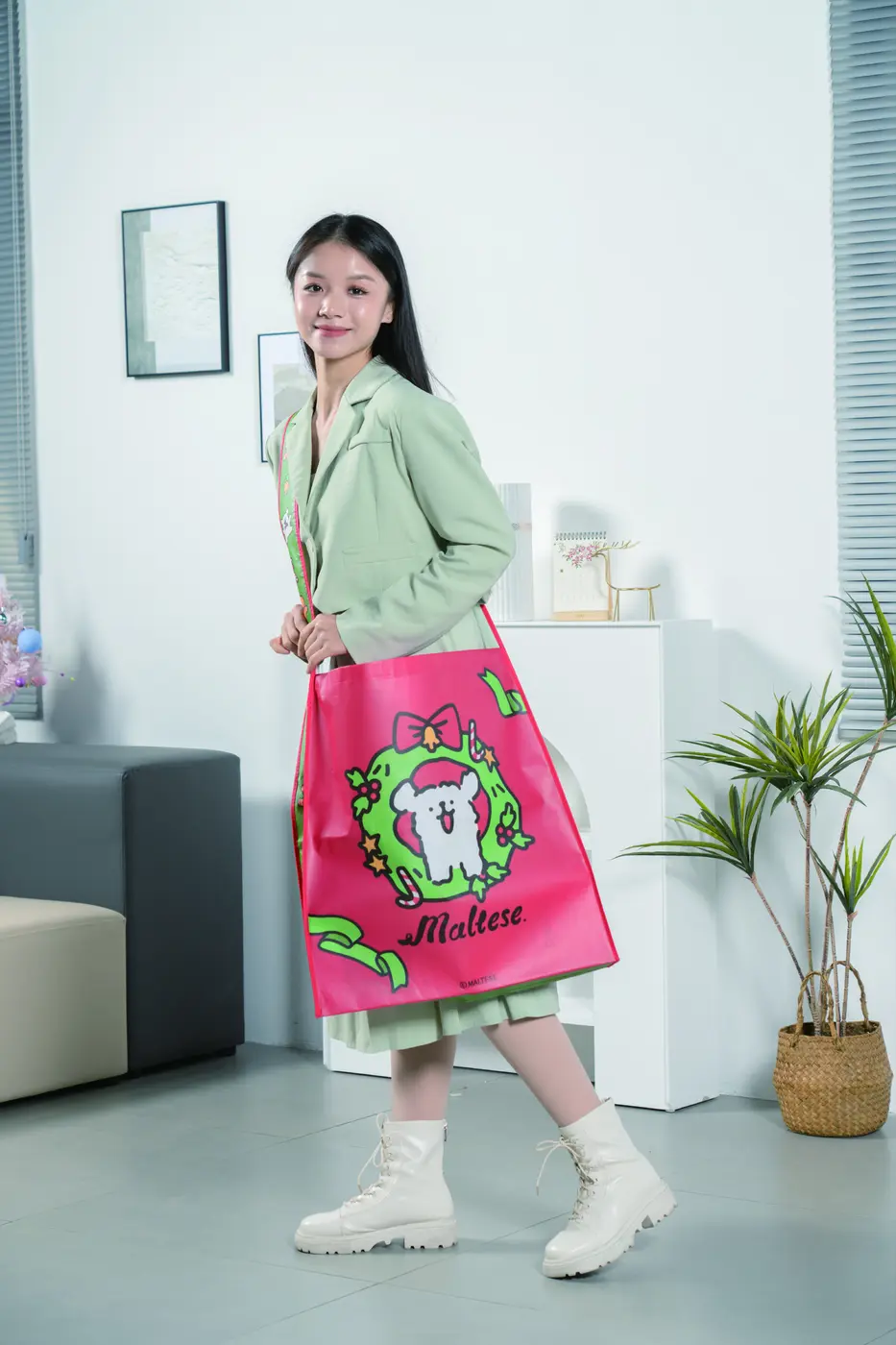
When developing custom non-woven bags, it is worth checking the handle length before production. Short handles work well for hand carrying, while longer handles are more comfortable over the shoulder. A small decision at the sampling stage can make a noticeable difference in daily use.
Laminated PP Woven Tote Bags: Strong Structure and Bold Printing
Laminated PP woven bags are a good fit when the design needs to be part of the product rather than a small logo added afterward.
The woven base provides strength, while the laminated outer surface supports bright colors, detailed illustrations and large-area graphics. Side panels, gussets and handle webbing can also use contrasting colors to make the design more distinctive.
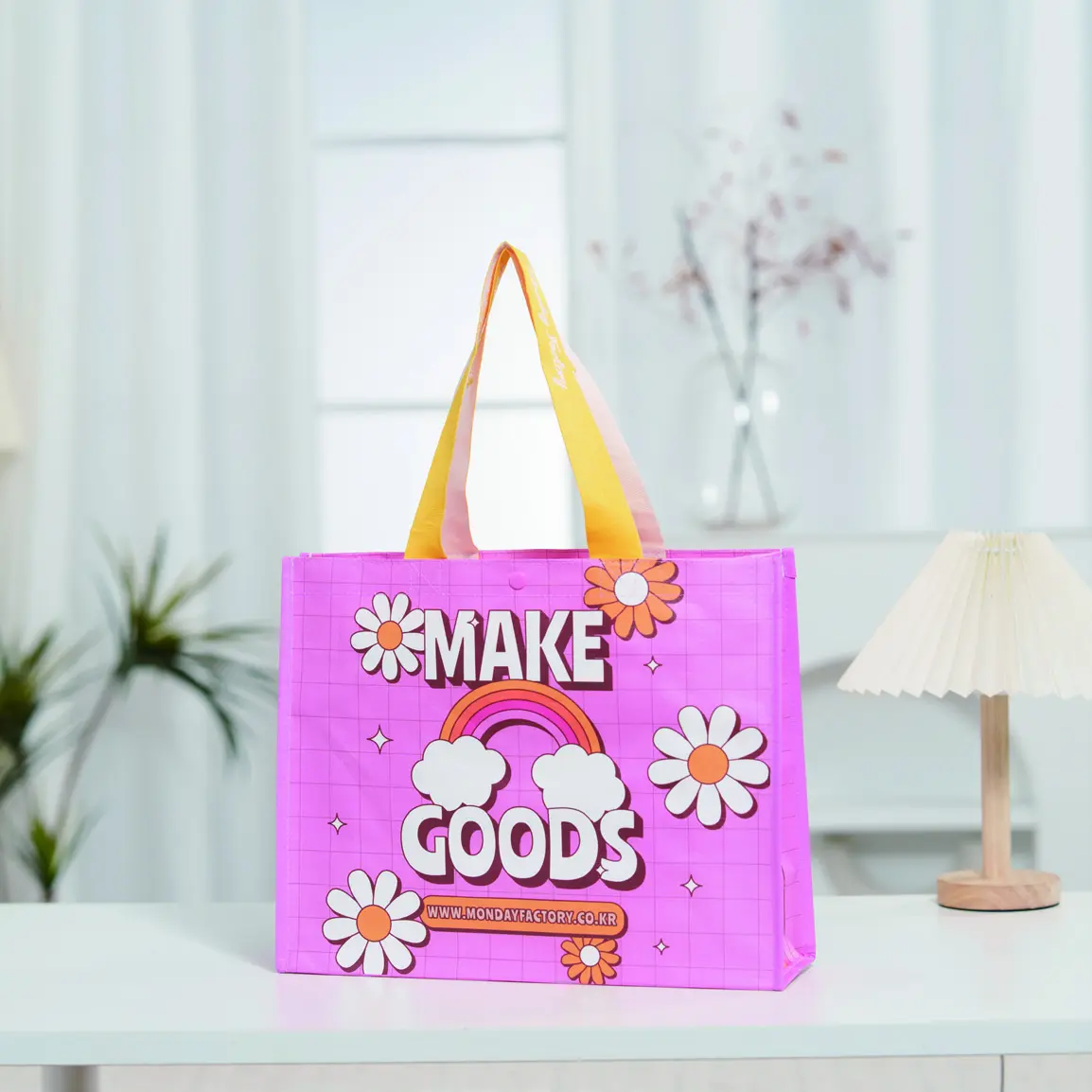
These bags are commonly used for grocery shopping, retail packaging, exhibitions and branded merchandise. Their structured shape gives products more support and offers a large visual area for campaign artwork.
For the best result, the artwork should be prepared around the complete bag layout. Important text and logos need enough distance from seams, folds and edge binding. This is especially important when a design continues across the front, back and side panels.
Insulated Cooler Bags: A Promotional Product With Everyday Value
An insulated bag has a clear purpose, which makes it more likely to remain in regular use.
Compact versions work well as lunch bags, while larger formats can carry groceries, drinks or picnic supplies. Depending on the intended use, the bag can include aluminum-film insulation, foam padding, a fold-over top, zipper closure or reinforced handles.
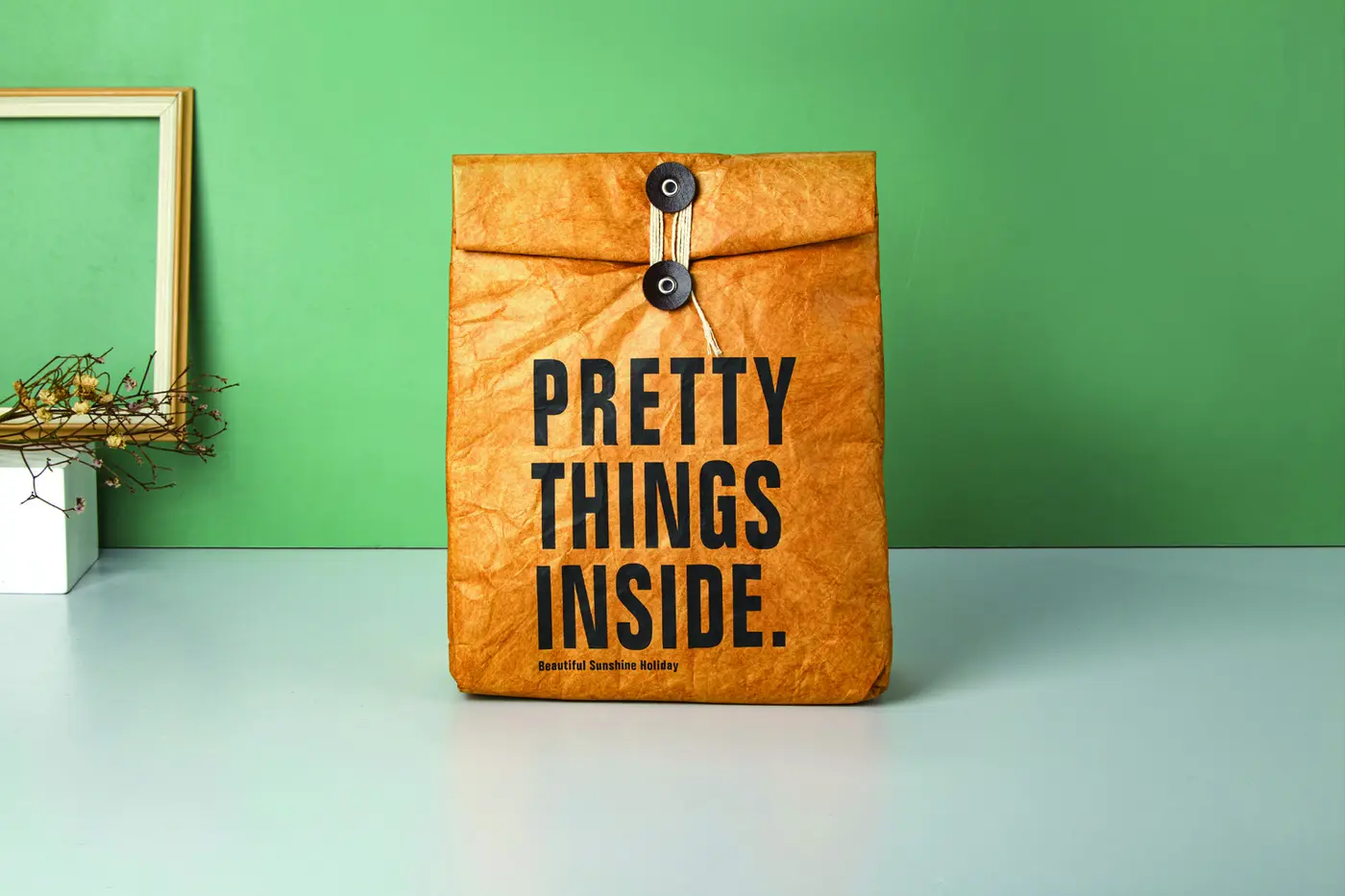
A custom insulated cooler bag can be used for employee welcome kits, food and beverage promotions, outdoor events or seasonal gift programs. Branding may be subtle, with a logo on one panel, or more visual, using a printed outer fabric.
The lining and closure deserve as much attention as the exterior. A neatly fitted lining, secure seams and a practical opening make the bag easier to clean and use.
Cotton Tote Bags: Simple, Familiar and Easy to Style
Cotton tote bags have a softer, more natural appearance than laminated alternatives. They suit bookstores, museums, lifestyle brands, cafes, conferences and sustainability-focused campaigns.
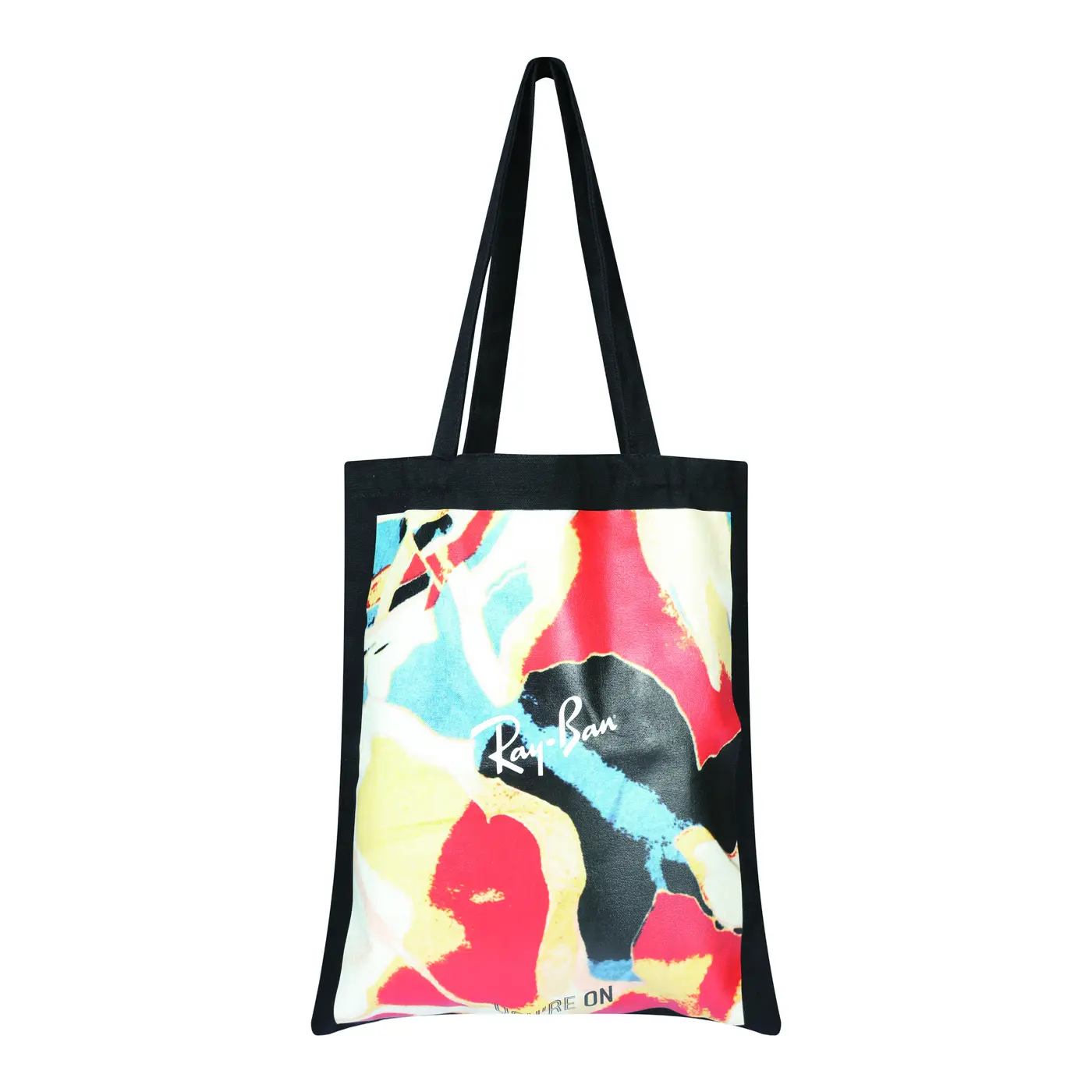
Fabric weight affects both the feel and the way the bag holds its shape. Lighter cotton is suitable for simple giveaways, while heavier canvas works better when the bag needs to carry books, laptops or retail products.
Screen printing is widely used for clean logo designs. Heat transfer supports detailed multicolor artwork, while embroidery can add texture to smaller logos. Before choosing a method, consider the artwork size, number of colors and the look you want the finished custom cotton tote bag to have.
Zippered Storage Bags: More Than a Shopping Tote
Not every branded bag needs to be carried through a store. Large zippered bags are useful for bedding, clothing, toys, seasonal items and household organization.
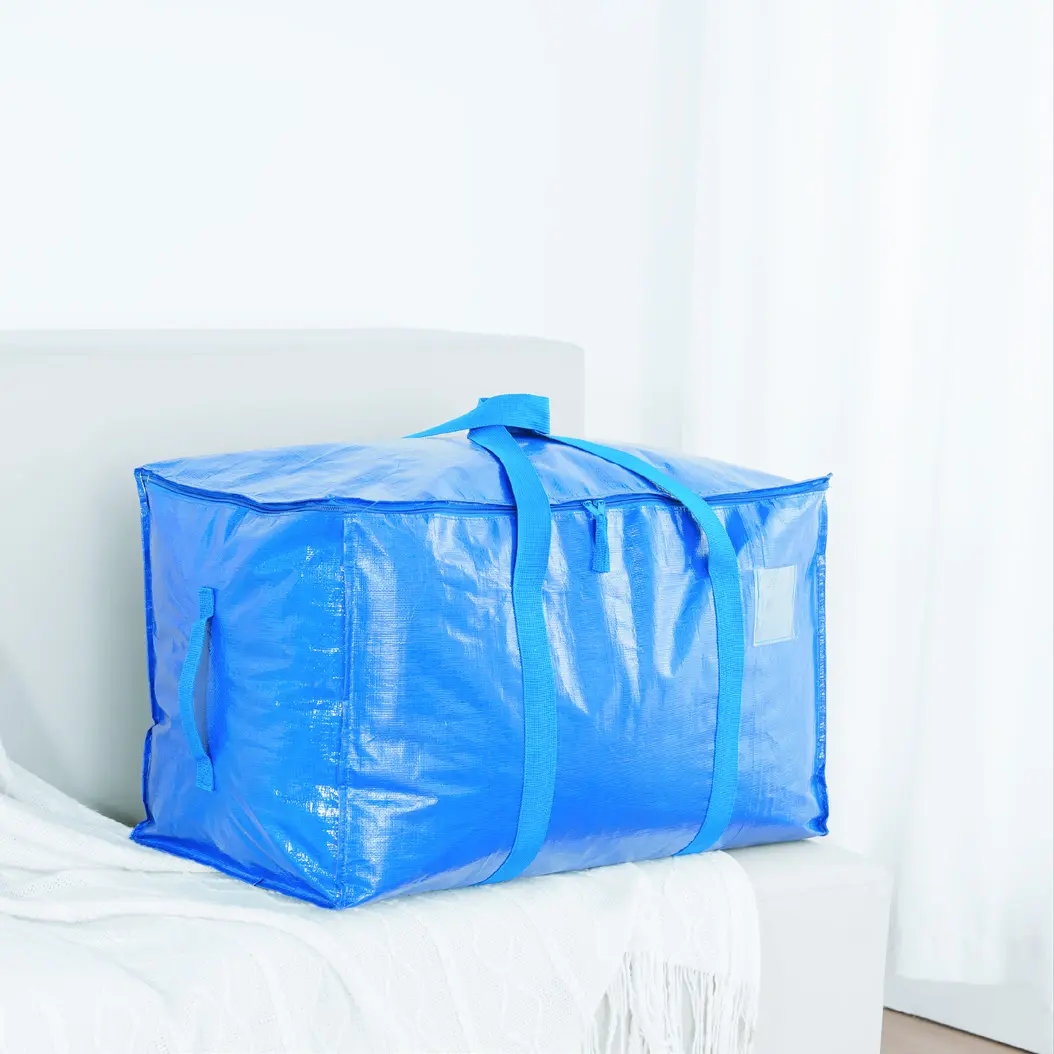
A zipper helps protect the contents, while reinforced handles make the bag easier to move. Transparent or semi-transparent panels can help users identify what is inside without opening it.
For retailers and home-product brands, custom storage bags can serve as both packaging and a reusable product. Size, zipper quality, handle reinforcement and seam strength should all be checked during sampling.
Behind the Finished Bag: Printing, Sewing and Inspection
A finished bag may look simple, but several production stages need to work together.
Material Preparation and Printing
Production begins with selecting the correct fabric weight, color and surface. The material must suit the printing method and the finished bag structure.
Roll-to-roll printing is useful for larger areas and repeating patterns. Screen printing works well for clean logos, while heat-transfer processes can reproduce more detailed graphics. Color, position and print dimensions should be confirmed through an artwork proof before bulk production.
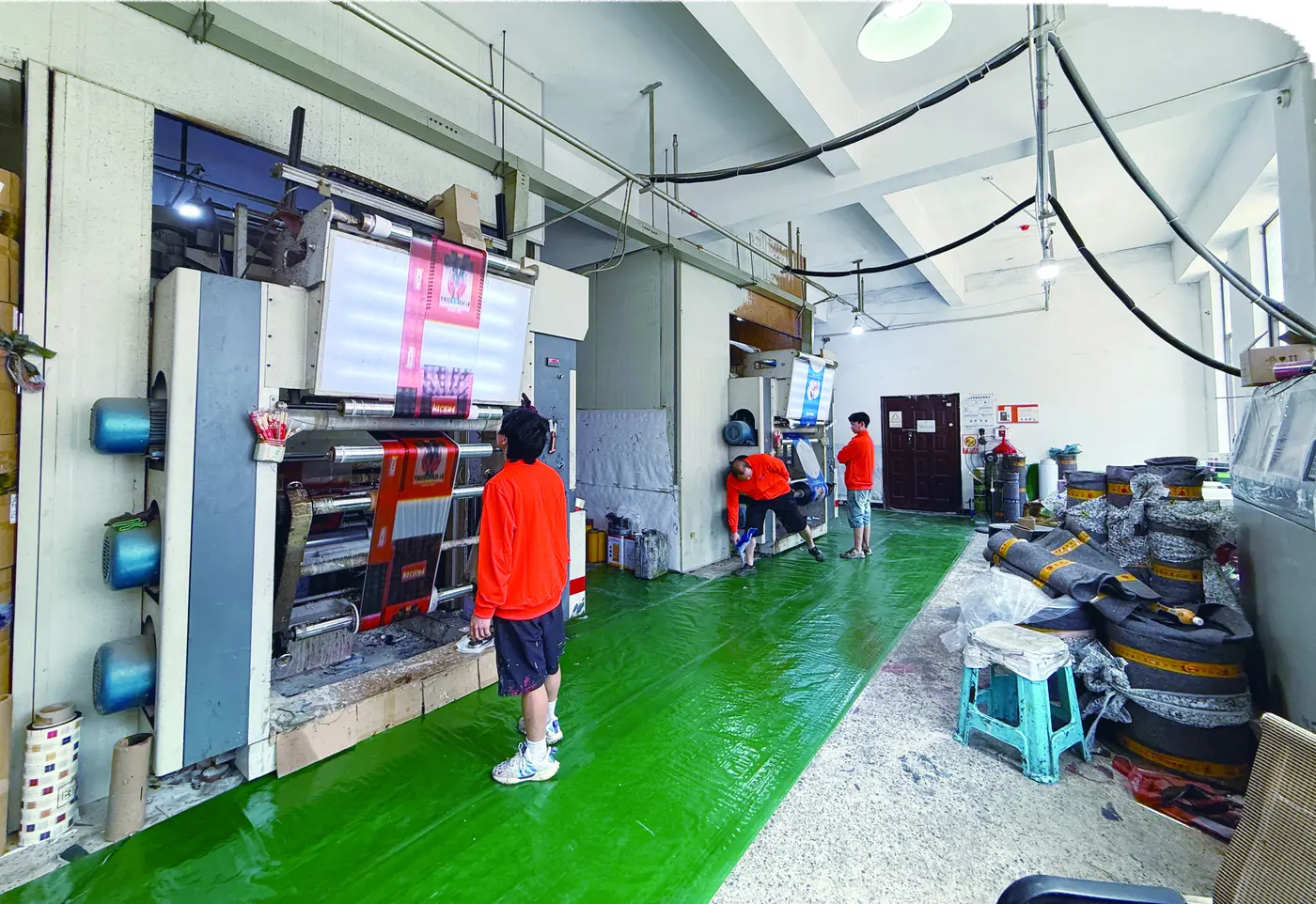
Print quality is not only about color. Alignment, edge definition and consistency across the order matter just as much. Designs that cross seams or continue around a gusset require particularly careful layout planning.
Cutting, Sewing and Assembly
After printing, the material is cut into panels and prepared for assembly. Depending on the construction, the panels may be sewn, heat pressed or combined using more than one method.
Handles, piping, zippers, pockets and reinforced areas are added during this stage. Sewing quality has a direct effect on how the bag carries weight, so handle attachment points and stress areas require close attention.
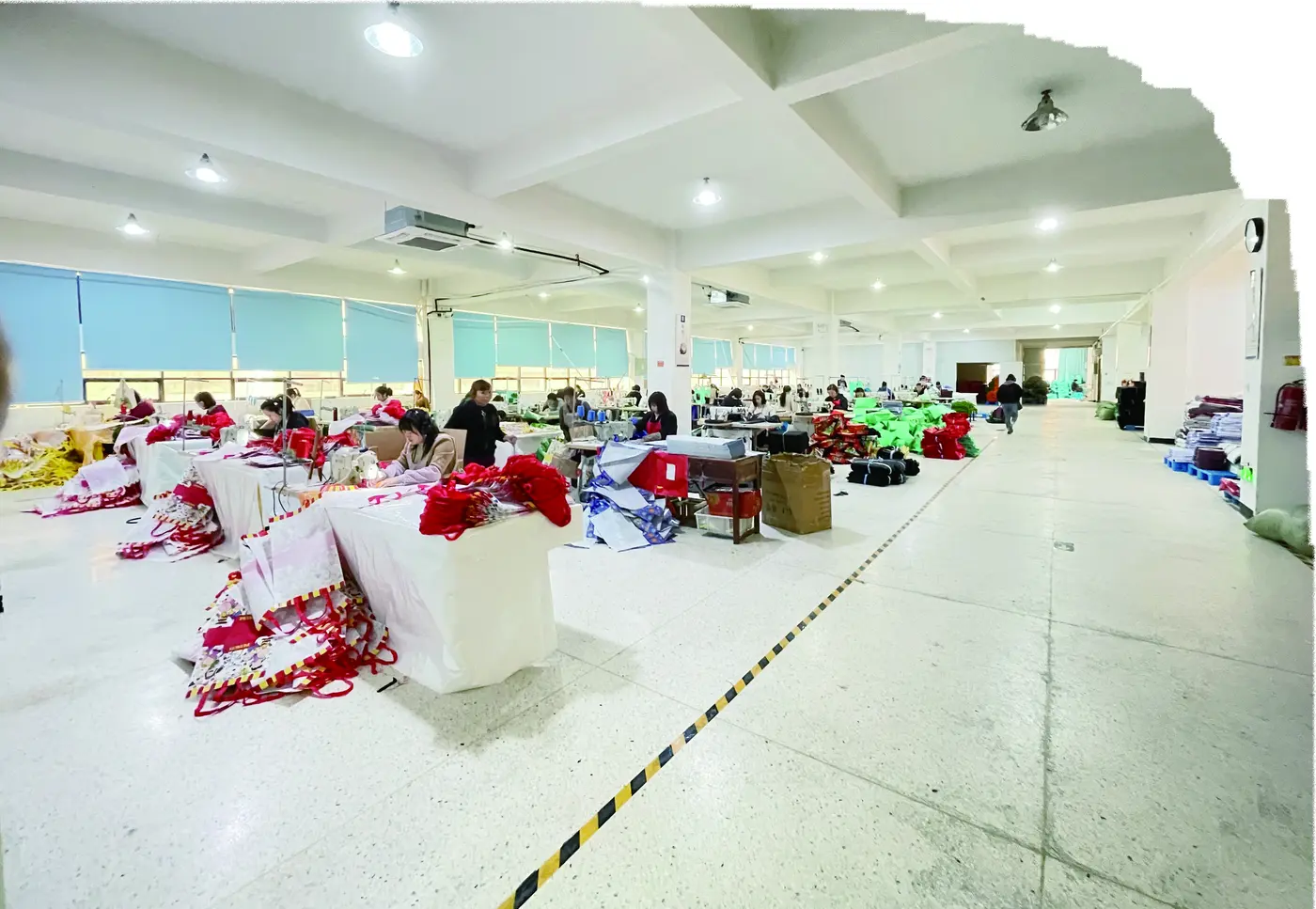
A production line capable of handling different materials makes it easier to develop coordinated collections rather than a single bag. For example, one campaign may combine a lightweight event tote, an insulated lunch bag and a larger storage bag using the same colors and visual identity.
Quality Inspection
Finished bags should be checked for print placement, dimensions, stitching, handle strength, closures and overall appearance. Loose threads, uneven seams and surface marks need to be identified before packing.
Where required, needle-detection equipment can be included in the inspection process to check finished textile products before shipment.
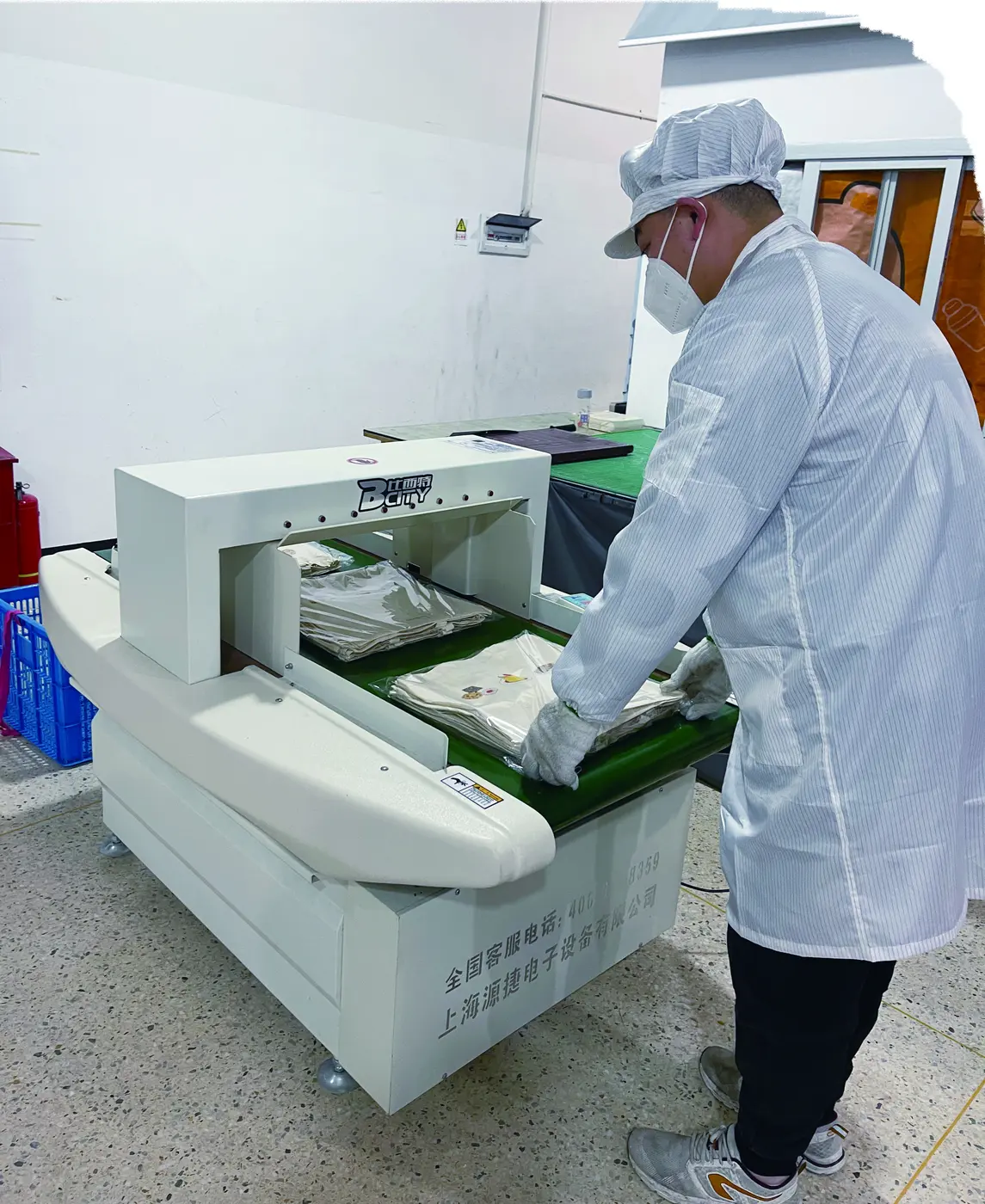
COMPAURA can also provide photos or videos before shipment, allowing customers to review the finished branding, packaging and overall production result.
What to Prepare Before Requesting a Custom Bag Quote
A clear brief saves time and makes material recommendations more accurate. Ideally, provide:
- The intended use of the bag
- Required quantity
- Preferred dimensions
- Expected carrying weight
- Material preference, if known
- Logo or artwork in a vector format
- Preferred printing method
- Required packaging
- Delivery country and target date
If the material is not yet decided, reference photos are useful. COMPAURA can compare structures and branding methods based on the intended application rather than simply copying the appearance of an existing bag.
Building a Reusable Bag Collection With COMPAURA
The most effective promotional bag is one that feels useful before it feels promotional. A clear design, comfortable handles and appropriate construction give people a reason to keep it.
COMPAURA supports custom bag projects from product selection and artwork layout through sampling, production coordination, quality checks, custom packaging and international delivery. Whether you need branded shopping bags, cooler bags, cotton totes or practical storage solutions, the project can be developed around your brand colors and intended use.
Planning a custom reusable bag project? Send us your preferred style, quantity, artwork and delivery requirements. We will help you compare suitable options and prepare the next step.