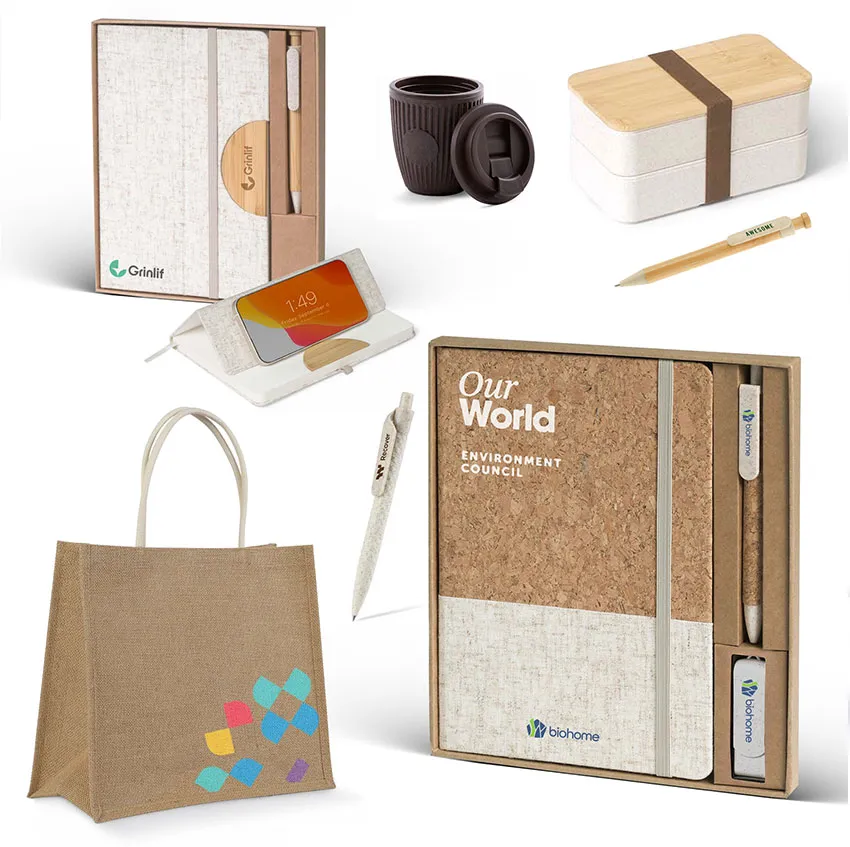
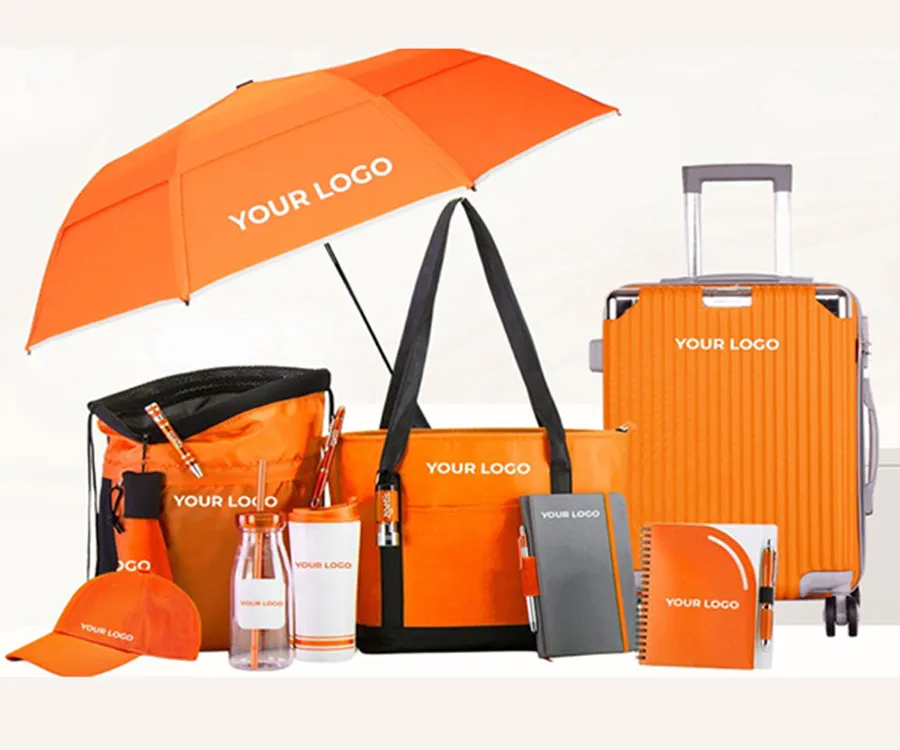
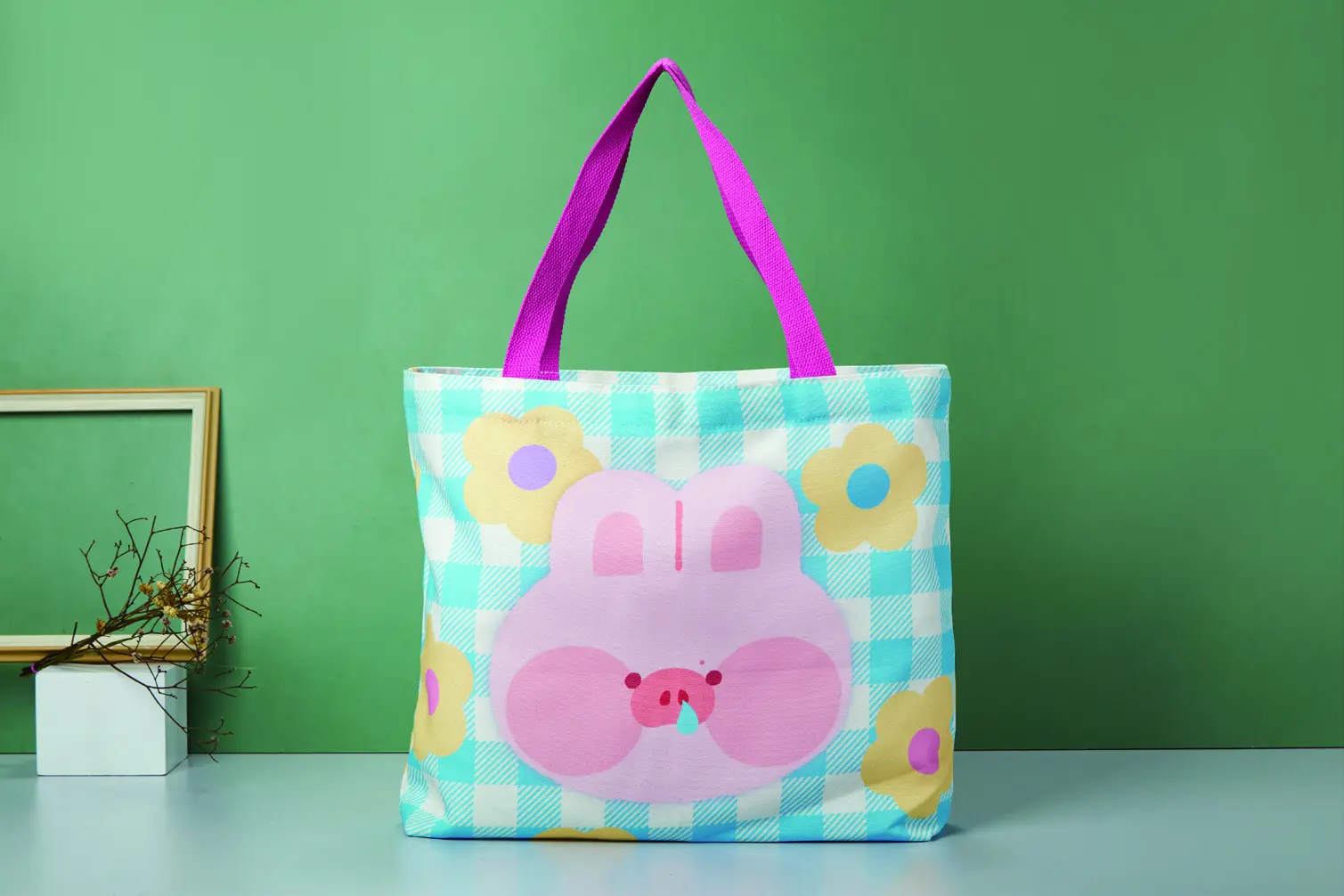
Eco-friendly promotional products have moved well beyond the familiar canvas tote bag. Today, brands can choose from recycled aluminium pens, cork notebooks, wheat-straw lunch boxes, coffee-ground mugs, RPET accessories and complete gift sets made with a considered mix of materials.
The choice is wider, but it is also more complicated. A product should not be selected simply because it looks “green.” It still needs to be useful, durable, suitable for the recipient and compatible with the right logo decoration method.
The strongest sustainable merchandise combines an honest material story with something people will genuinely use.
Begin With Useful Life, Not Just the Material Label
A promotional item creates value when it remains in use. A well-made reusable mug carried to work every morning can provide considerably more brand exposure than a novelty item that is forgotten after one event.
Before comparing materials, consider three practical questions:
- Who will receive the product?
- Where and how will they use it?
- Does the product solve a small, recurring need?
A notebook and pen may be ideal for conferences or employee onboarding. A reusable lunch box suits workplace wellness campaigns, schools and outdoor events. An insulated bottle or coffee mug can work across almost any audience.
Material selection matters, but usefulness should come first.
Recycled Aluminium: Durable and Easy to Use Every Day
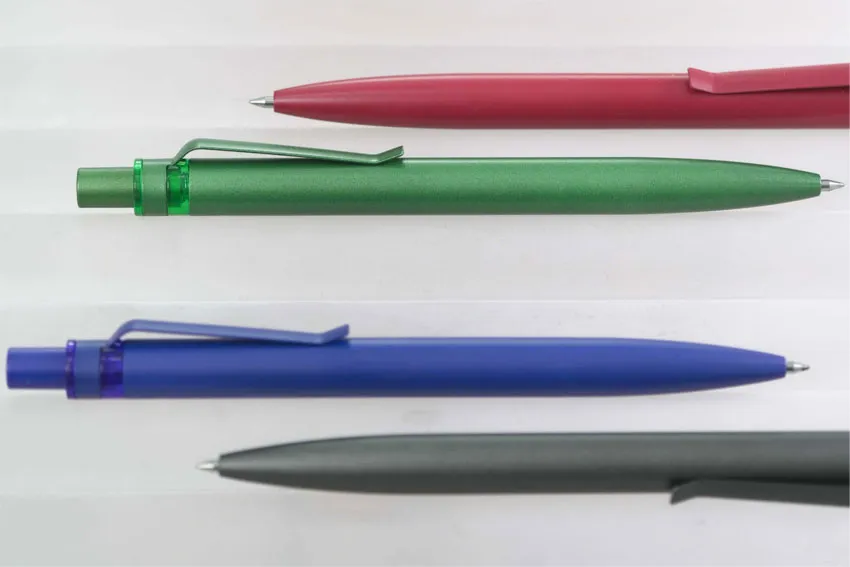
For a branded pen, the advantages are straightforward: it is lightweight, comfortable to carry and likely to stay on a desk, in a notebook or inside a conference bag.
Laser engraving can create a clean, durable logo on many aluminium surfaces. Printing may be more suitable when an exact brand color or a multicolor design is required. The final method depends on the finish, available decoration area and artwork.
When recycled content is central to a campaign, supporting documentation should be requested before making a specific environmental claim.
Cork and Cotton Bring Warmth to Office Gifts
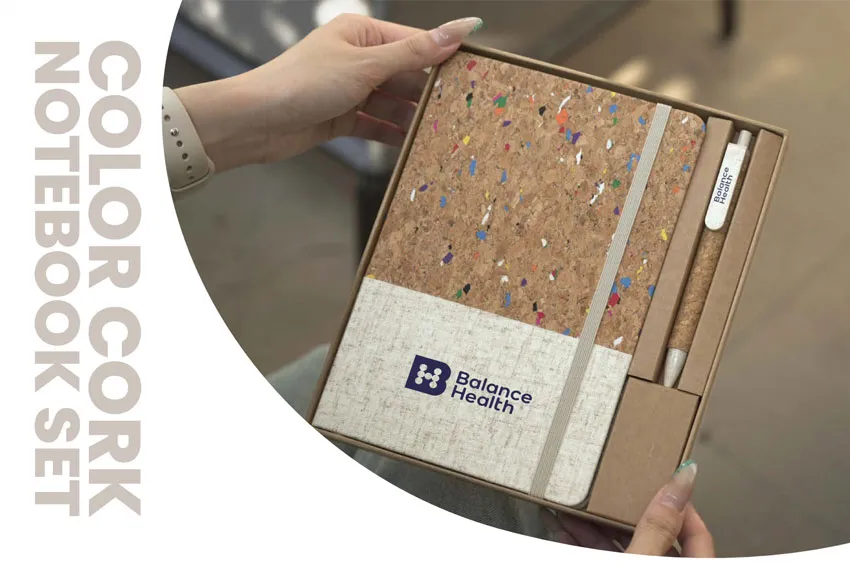
A cork-and-cotton notebook set feels appropriate for:
- Employee welcome packs
- Conferences and workshops
- Client appreciation gifts
- Sustainability-themed campaigns
- Education and community programs
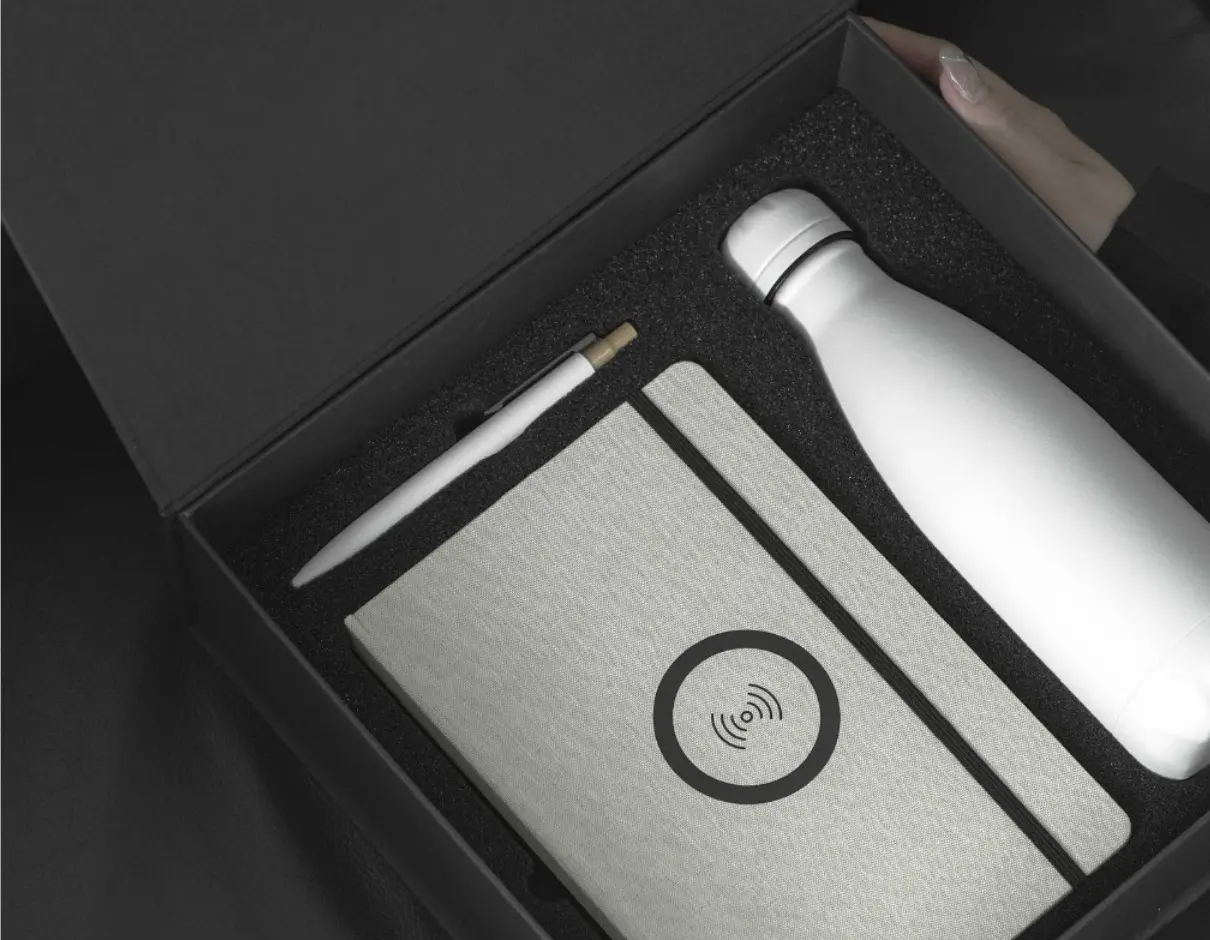
These materials also offer an attractive visual contrast. Cork provides texture, while cotton panels create a lighter area for printing. A notebook can be combined with a matching pen, charging accessory or presentation box to create a more complete branded gift.
Natural variation is part of the appeal of cork and bamboo. Buyers should expect small differences in grain and color rather than assuming every unit will look completely identical.
Wheat Straw and Bamboo Work Well for Reusable Foodware
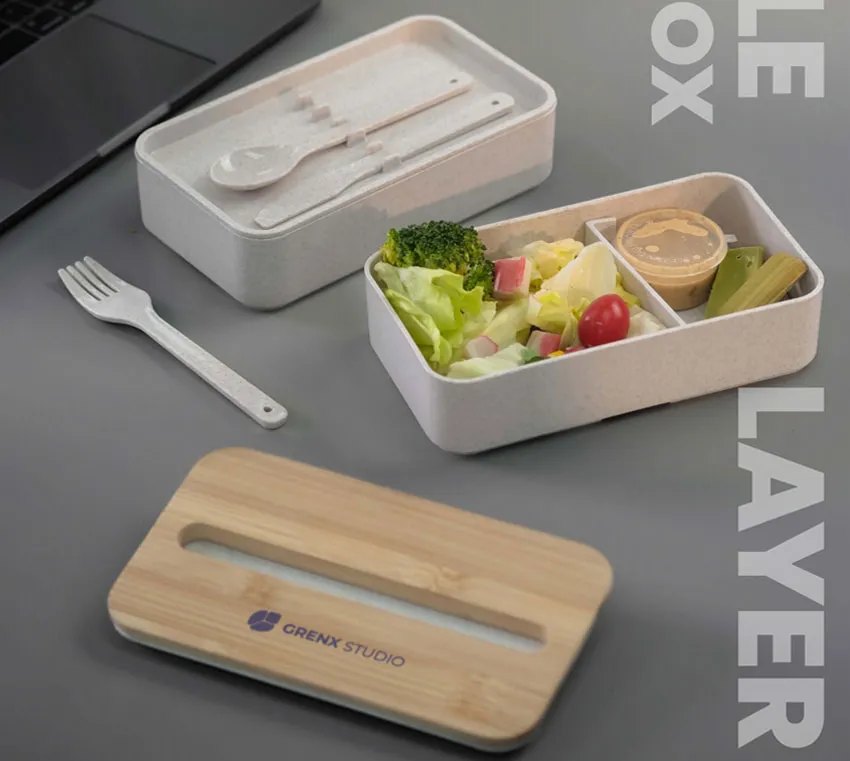
Wheat-straw composites are commonly used for lunch boxes, cups, cutlery and other lightweight household products. Bamboo is often added as a lid, handle or decorative detail, giving the product a warmer and more distinctive finish.
These products are a practical choice for workplace lunches, school campaigns, wellness programs and outdoor events. A double-layer lunch box with reusable cutlery, for example, offers more long-term value than a single-use giveaway.
It is important to describe these materials accurately. Many wheat-straw products are composites that contain a binding polymer. They should not automatically be described as plastic-free, biodegradable or home-compostable unless the specific construction and certification support that claim.
Clear, precise wording builds more trust than an exaggerated environmental promise.
Coffee-Ground Composites Add a Different Kind of Material Story
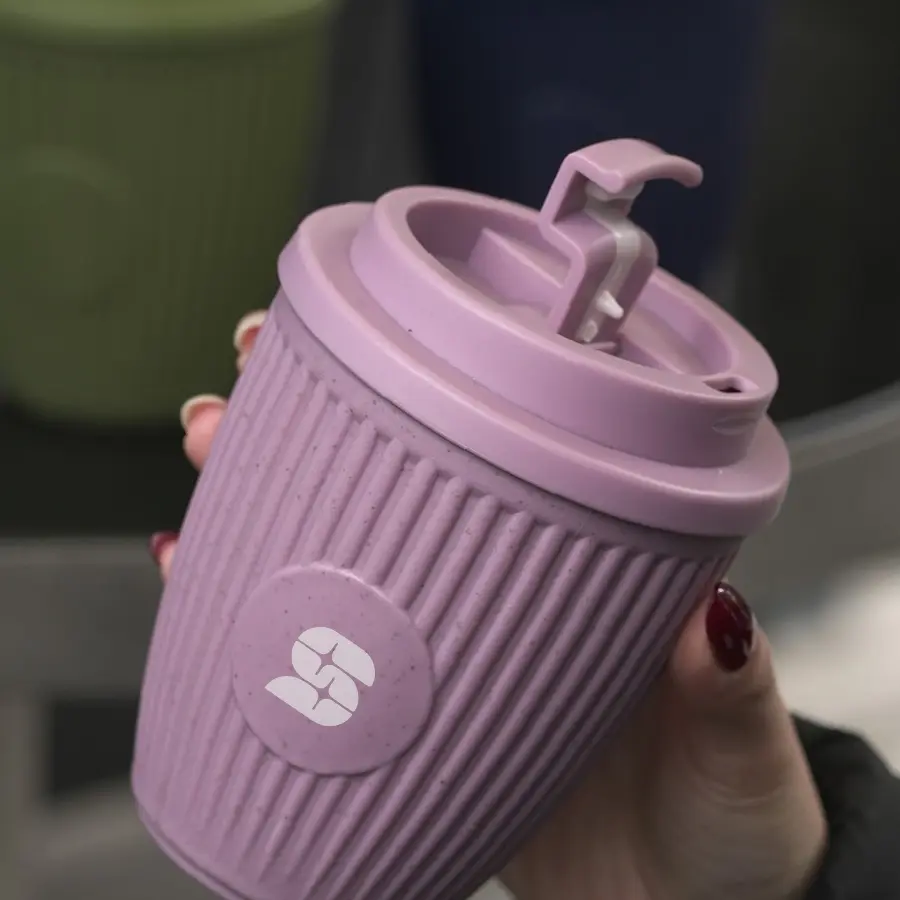
Coffee-ground material is an interesting option for reusable mugs and selected lifestyle products. The visible speckled finish gives each product a recognizable texture and creates a natural connection with coffee culture.
A double-wall coffee mug is especially suitable for cafés, hospitality businesses, office teams, exhibitions and customer loyalty campaigns. It can be paired with coffee beans, a voucher, a notebook or other desk accessories to make a focused gift set.
As with wheat-straw composites, the complete material composition should be checked before making disposal or biodegradability claims. The most credible message is often the simplest: the product incorporates a repurposed material and is designed for repeated use.
RPET Turns Recycled Plastic Into Practical Fabric Accessories
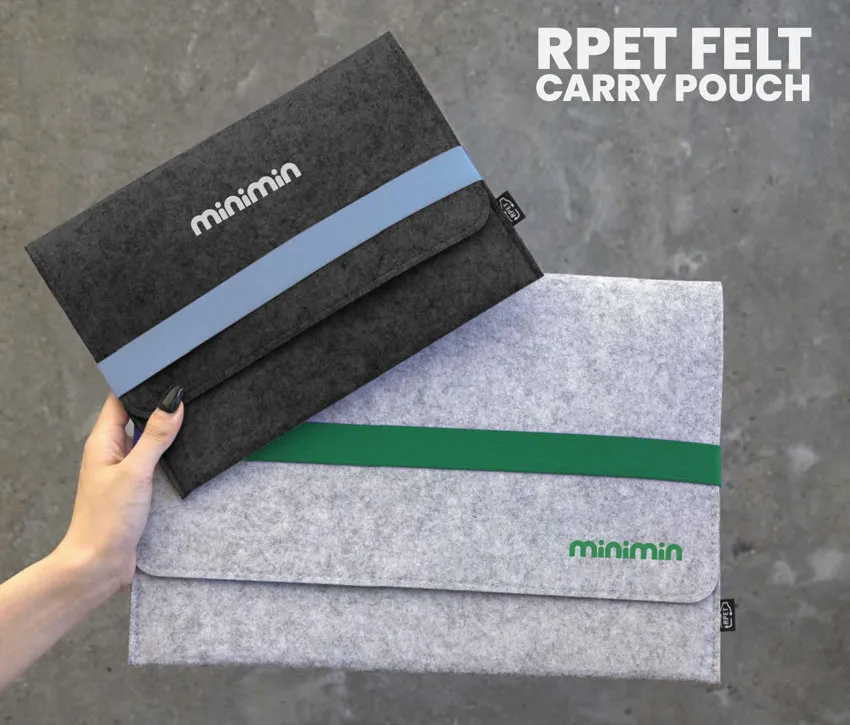
RPET is produced using recycled polyethylene terephthalate, the material commonly associated with plastic beverage bottles. It can be processed into fibers and used in felt pouches, shopping bags, document holders and other textile products.
An RPET felt pouch is useful because it can protect a laptop, tablet, notebook or a collection of smaller gifts. It can also become part of the packaging rather than being discarded after the recipient opens the set.
The material has a modern appearance and provides a good surface for screen printing, transfer printing, labels or selected embroidery applications. As always, the best decoration method depends on the material weight, surface texture and artwork detail.
If recycled content is being advertised, documentation such as a transaction certificate or material declaration may be required, depending on the project and market.
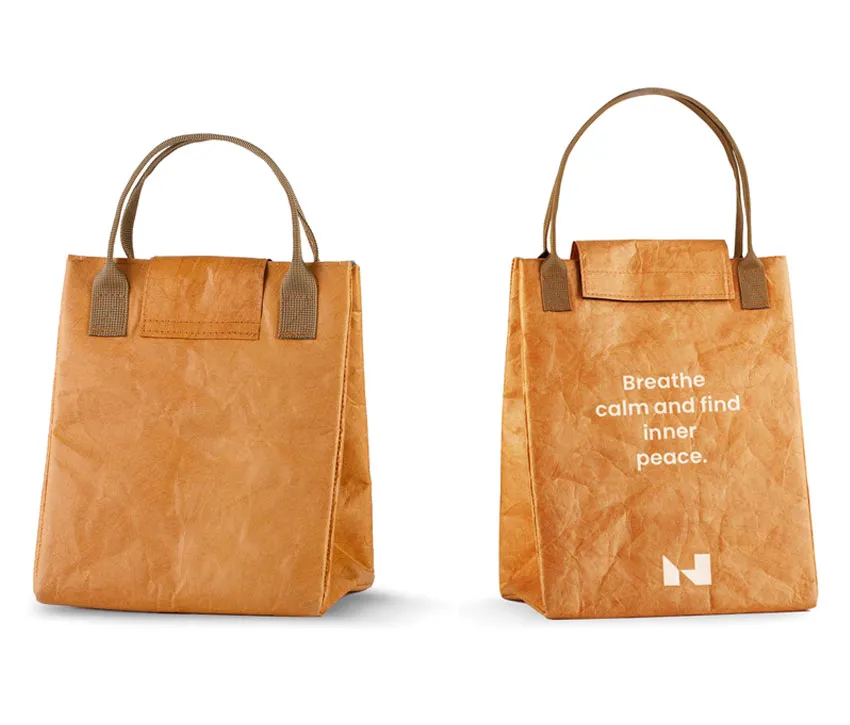
Match the Logo Method to the Material
Choosing the right product is only half the job. Decoration affects how long the branding remains attractive and how premium the finished item feels.
- Laser engraving for suitable aluminium and bamboo surfaces
- Screen printing for simple logos on bags, pouches and flat product areas
- Heat transfer for detailed or multicolor graphics on compatible fabrics
- Pad printing for small, curved or irregular product surfaces
- UV printing for full-color artwork on suitable hard surfaces
- Debossing or embossing for a restrained finish on notebooks and packaging
A large logo is not always the best logo. Subtle branding often works particularly well on sustainable corporate gifts because it makes the product feel less like advertising and more like something the recipient chose for themselves.
Avoid Vague Environmental Claims
Terms such as “eco-friendly,” “green” and “sustainable” should be supported by specific information wherever possible.
Instead of claiming that an item is simply good for the planet, explain what makes it different:
- The body contains recycled aluminium.
- The pouch is made from RPET felt.
- The notebook combines cork and cotton.
- The lid uses bamboo from a documented source.
- The mug incorporates processed coffee grounds.
- The item is designed to replace a commonly disposable product.
This approach gives customers useful information and makes the product story more credible.
From Material Selection to Finished Production
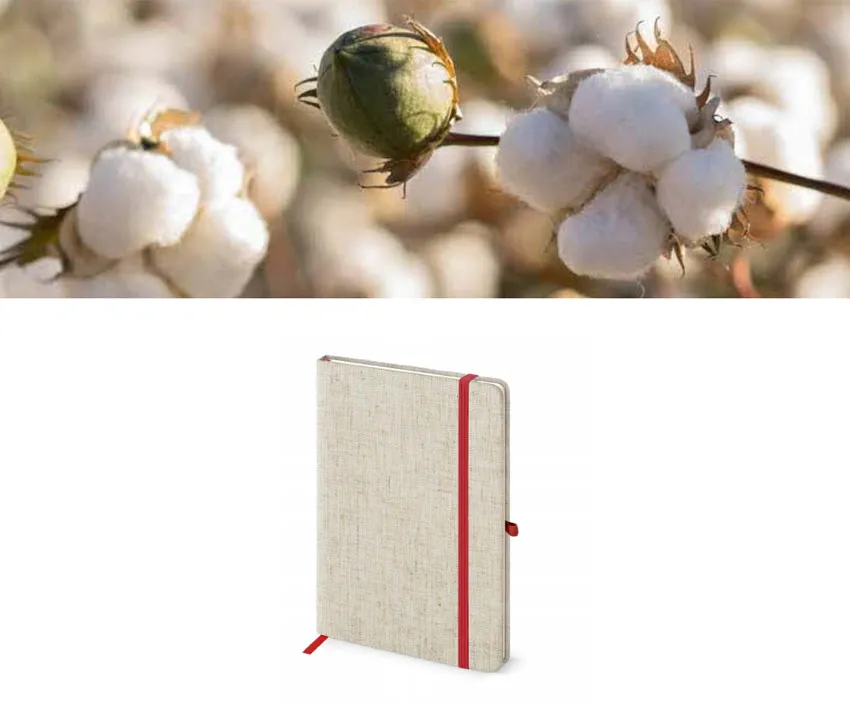 A successful project requires more than choosing a photograph from a catalog. Material samples, logo tests, color matching, packaging fit and product safety requirements all need to be considered before production begins.
A reliable workflow normally includes:
- Defining the audience, intended use, quantity and delivery date
- Comparing material and product options
- Reviewing artwork and decoration areas
- Producing a digital mockup or physical sample
- Confirming packaging and labeling requirements
- Monitoring production and logo application
- Inspecting finished goods before shipment
For gift sets, the factory packing stage is particularly important. Inserts need to hold each item securely, colors should feel consistent, and the finished box should arrive looking as good as it did during sample approval.
Planning Eco-Friendly Promotional Products With COMPAURA
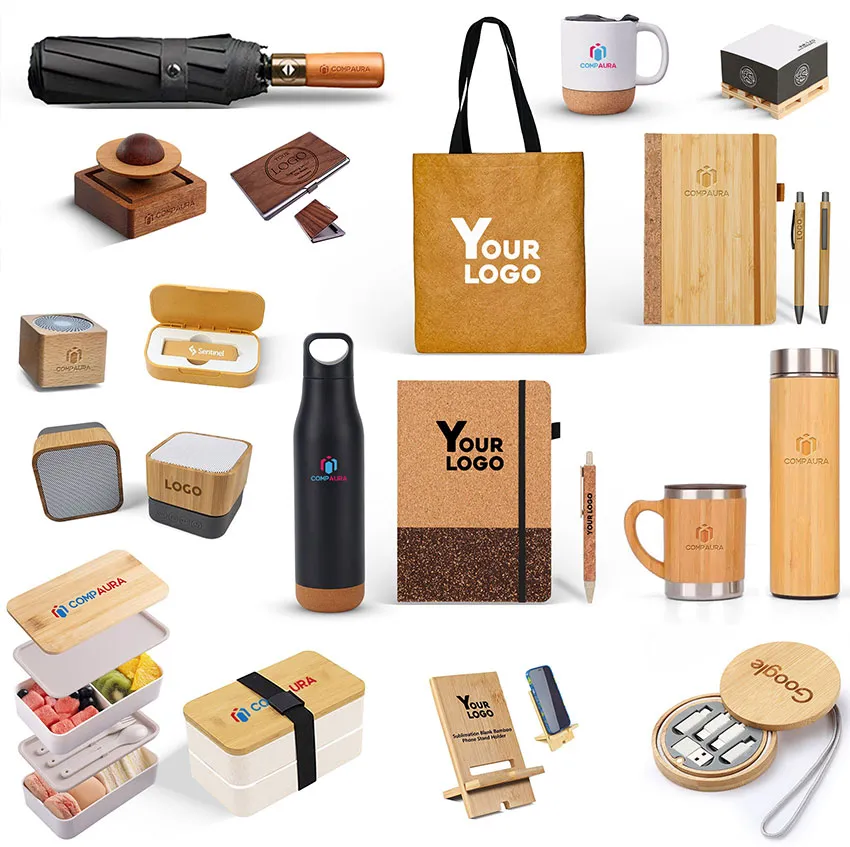 COMPAURA helps businesses develop custom promotional merchandise around practical use, appropriate materials and consistent branding.
Support can include product sourcing, material comparison, logo mockups, sampling, custom packaging, production coordination, quality inspection and delivery planning. Different products can also be combined into a coordinated corporate gift set rather than being handled as separate purchases.
There is no single material that is right for every project. The best choice depends on the audience, campaign, budget, branding method and expected product life.
If you are planning eco-friendly promotional products for an event, employee program or customer campaign, contact COMPAURA to discuss suitable materials and customization options.